

What Makes Artisan Jewelry Durable: A Guide to Lasting Pieces
Last Updated: October 30, 2026
Quick Summary
Artisan jewelry durability is the result of three choices: the metal used, the way the stone is secured, and the quality of the wire work or setting that holds everything together. A beautiful design built on weak construction will fail, while a simple design built well will not.
- Sterling silver is soft enough to reshape but tarnishes over time, while gold-filled offers a thick gold layer with low tarnish risk.
- A secure setting grips the stone's edge with no gap and covers the stone's base.
- A thin, open bail is one of the most common failure points on handmade pendants.
- Put jewelry on last, since perfume, lotion, and hairspray speed up tarnish.
- Clean gemstones with lukewarm water and mild soap, and skip ultrasonic cleaners on soft stones.
Table of Contents
- Why Artisan Jewelry Durability Comes Down to Construction
- The Best Metals for Handmade Jewelry and How They Hold Up
- Wire-Wrapped Jewelry Durability: What Makes a Wrap Last
- How to Tell If a Gemstone Setting Is Secure
- How to Prevent Jewelry Tarnish Before It Starts
- How to Care for Gemstone Jewelry Day to Day
- Choosing a Handmade Piece You Can Wear for Years
- Frequently Asked Questions
Why Artisan Jewelry Durability Comes Down to Construction
Durability in handmade jewelry is not about how pretty a piece looks on day one. It is about how the maker built it. Two pendants can hold the same stone and cost the same, yet one can last for years while the other loses its stone quickly. The difference is construction.
So what makes artisan jewelry durable? Artisan jewelry durability is the result of three choices: the metal used, the way the stone is secured, and the quality of the wire work or setting that holds everything together. A beautiful design built on weak construction will fail. A simple design built well will not.
That is the core idea behind every piece we make, and it is the thread running through this guide. Below, we break down each construction decision so you can judge a handmade piece before you buy it, whether it comes from us or anyone else.
The Best Metals for Handmade Jewelry and How They Hold Up
The metal is the frame of the piece, so it decides most of the wear you will get. Here is how the common handmade jewelry metals compare:
| Metal | Durability | Tarnish Risk | Best For |
|---|---|---|---|
| Sterling silver | Good, soft enough to reshape | Tarnishes over time | Everyday pendants, wire wraps |
| Gold-filled | Strong, thick gold layer | Low | Daily wear, sensitive skin |
| Solid gold | Excellent, very long-lasting | None | Heirloom pieces |
| Stainless steel | Very strong, resists scratching | Very low | Beaded and chain designs |
| Copper and brass | Soft, patinas with age | High | Statement pieces, casual wear |
For example, our Rainforest Jasper wire-wrapped pendant necklace pairs a jasper stone with silver wire and a silver plated chain.

Wire-Wrapped Jewelry Durability: What Makes a Wrap Last
Wire-wrapped jewelry durability comes down to tension and coverage.
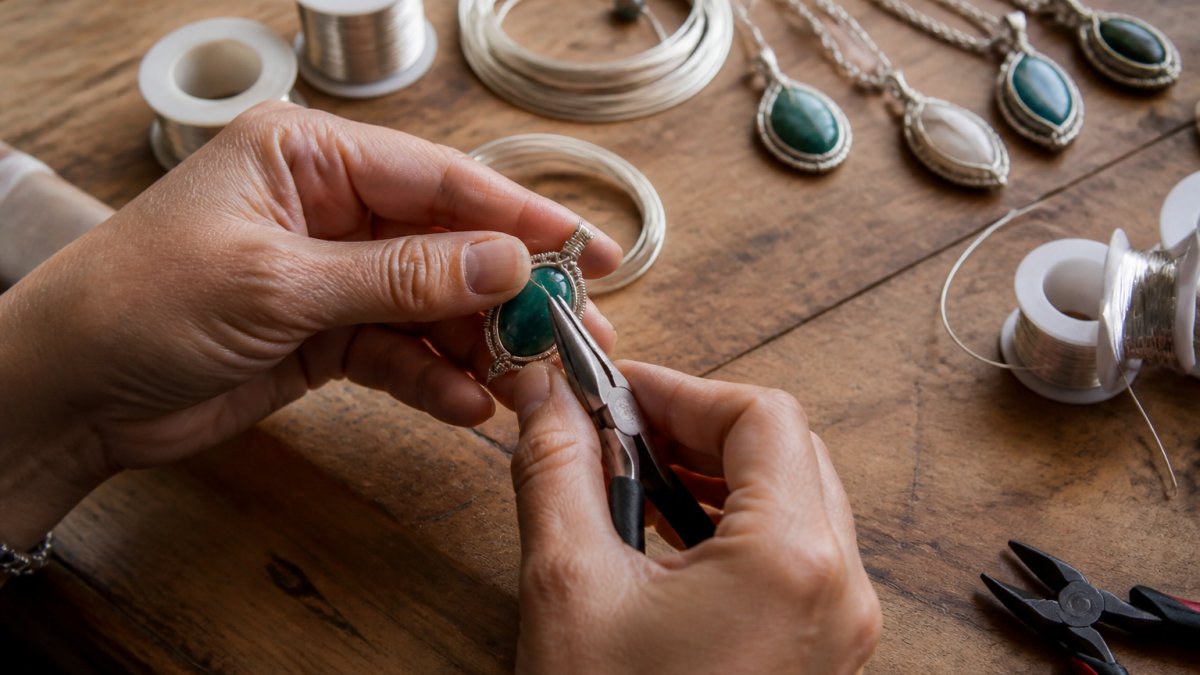
You can see the handcrafted silver wire wrap in our Green Onyx Pendant Necklace in Silver.

How to Tell If a Gemstone Setting Is Secure
Then check these points:
- The prongs or wire grip the stone's edge, not just rest against it
- No gap shows between the stone and the metal
- The back of the setting covers the stone's base, so it cannot push through
- The bail, the loop the chain passes through, is closed and thick enough to carry the pendant's weight
A thin, open bail is one of the most common failure points on handmade pendants. It wears through faster than the rest of the piece because it carries all the weight. Look for a bail with some thickness and a closed loop.
How to Prevent Jewelry Tarnish Before It Starts
Tarnish is a chemical reaction between metal and the air around it, and you can slow it down with a few habits. The key is to keep moisture and chemicals off the metal and to store pieces where air cannot reach them.
Copper Turquoise Heart Necklace – Gold Wire Wrapped Gemstone Pendant →
Start with these steps:
- Put jewelry on last. Perfume, lotion, and hairspray all speed up tarnish. Let them dry first.
- Take pieces off before swimming, showering, or cleaning. Chlorine and harsh cleaners dull metal fast.
- Wipe each piece with a soft cloth after wearing. This removes skin oils before they set.
- Store pieces in an airtight bag or a lined box, not loose on a dresser.
- Keep a tarnish strip in your jewelry box to absorb the sulfur in the air.
How to Care for Gemstone Jewelry Day to Day
Caring for gemstone jewelry means cleaning gently and storing it separately. Most gemstones are softer than the metal around them, so harsh cleaners and rough handling do the most damage.
Follow these habits:
- Clean with lukewarm water and a drop of mild soap. Use a soft brush, never a toothbrush with stiff bristles.
- Skip ultrasonic cleaners and steam on soft or porous stones.
- Store each piece in its own pouch so stones do not scratch each other.
- Check the setting and wire every few months for looseness or wear.
- Remove jewelry before heavy chores or exercise to avoid knocks and snags.
For a deeper, step-by-step routine, read our full guide on how to care for gemstone jewelry.
Choosing a Handmade Piece You Can Wear for Years
The most durable handmade piece is the one built for how you actually live. A delicate pendant suits daily wear. A softer copper statement piece suits occasional outings. Match the construction to your routine, and the piece will last.
Weighing cost against lifespan is worth doing, as covered in our buyer's guide on whether handmade jewelry is worth the price. If you want concrete starting points, see our roundup of the best artisan jewelry for everyday wear.
One honest note: no piece lasts forever without care. Wire can loosen, and settings can wear. Ask any maker how they handle repairs before you buy.
Frequently Asked Questions
What makes artisan jewelry durable?
Durability in artisan jewelry comes from three things: the metal used, how the stone is secured, and how the piece is finished. Proper care, like storing pieces dry and cleaning gemstone jewelry gently, extends that life further.
Is handmade jewelry more durable than mass-produced jewelry?
It can be. That said, durability depends on the maker's materials and methods, not the label alone. Ask what metal and setting are used, and check reviews for how pieces hold up over months of wear.
Can wire-wrapped jewelry be durable enough for everyday wear?
Yes, when the wrap is tight and the wire gauge suits the stone's weight. A well-made wire-wrapped pendant in gold or silver wire can handle daily wear, though you should remove it for swimming, heavy cleaning, or gym sessions. Check that the wire crosses the stone in several places and that ends are tucked flat, not sharp.
How do you keep handmade jewelry from tarnishing?
Keep pieces dry and away from moisture, perfume, and lotions. Store each item in a small airtight bag or a lined box, and wipe it with a soft cloth after wearing. Sterling silver and copper tarnish faster in humid air, so a silica packet in your jewelry drawer helps. Clean gemstone jewelry with a soft cloth rather than soaking it, and avoid harsh chemicals. These habits slow tarnish and protect the wire wrap at the same time.
Durability is not luck. It is the metal, the wrap, and the setting working together, and it is something you can check before you spend a cent. At Jasper Rain Designs, every piece is handmade by designer Joilene, one of a kind, and built around natural stones chosen for the long haul. Our customers say it best in their reviews, and we stand behind the craftsmanship in each piece. Ready to find one built to last? Get started with Jasper Rain Designs and shop our handmade pieces today.


