

How to Layer Gemstone Necklaces by Length
Quick Summary
To layer gemstone necklaces, use three different lengths so each chain sits at its own distance from the collarbone. Start with a short base piece near the throat, add a middle layer about 2 inches longer, and finish with a long accent. Distinct lengths keep pieces separate and let each stone catch the light.
- Choose three lengths: a short base, a middle layer, and a long accent.
- Place each new layer about 2 inches longer than the one above it.
- Put your largest or heaviest stone on the middle layer for balance.
- Fasten the longest necklace first, then the middle, then the base.
- Check the stack from the side, since heavy pendants pull chains forward and cause crossing.
Table of Contents
- Why Length Matters When You Layer Gemstone Necklaces
- Choosing the Best Necklace Lengths for Layering
- Step-by-Step: Layering Gemstone Necklaces at Different Lengths
- How to Layer Necklaces Without Them Tangling
- Layering Chains With Pendants: Spacing and Balance
- Necklace Layering Hacks for Different Necklines
- Caring for Your Layered Gemstone Necklaces, Then Building Your Stack
- Frequently Asked Questions
Why Length Matters When You Layer Gemstone Necklaces
Layering gemstone necklaces is one of the easiest ways to build a stack that looks intentional. The secret is length. When each chain sits at its own distance from the collarbone, the pieces stay separate, catch the light and never fight for space at your throat. At Jasper Rain Designs, we design our pieces with this in mind, so you can build a stack that feels balanced from the first wear.
Length decides how the layers relate to each other. Two necklaces of the same length sit on top of each other and look like one thick, messy strand. Pieces that are spaced apart show each stone and each texture.
Here is what length does for your stack:
- Separates the pieces: Each chain gets its own visible line.
- Shows off the stones: A garnet bead has room to catch the light.
- Prevents tangling: Chains that sit at different depths rub less.
- Balances the look: A short piece anchors the stack while a long one adds movement.
Think of length as the framework. Once you set it, the stones, textures and pendants fall into place.
Choosing the Best Necklace Lengths for Layering
Most stacks work best with three lengths. A short piece sits close to the base of the throat, a middle piece falls at the collarbone and a long piece reaches the mid-chest. Using all three gives you room to build the look without crowding.
Here are the common lengths and what they do:
| Length | Where It Sits | Best Use |
|---|---|---|
| Choker-style (14-16 inches) | Base of the throat | Anchors the stack |
| Princess (18 inches) | Collarbone | Main layer |
| Matinee (20-24 inches) | Upper chest | Adds movement |
| Opera (28-30 inches) | Mid-chest | Long accent |
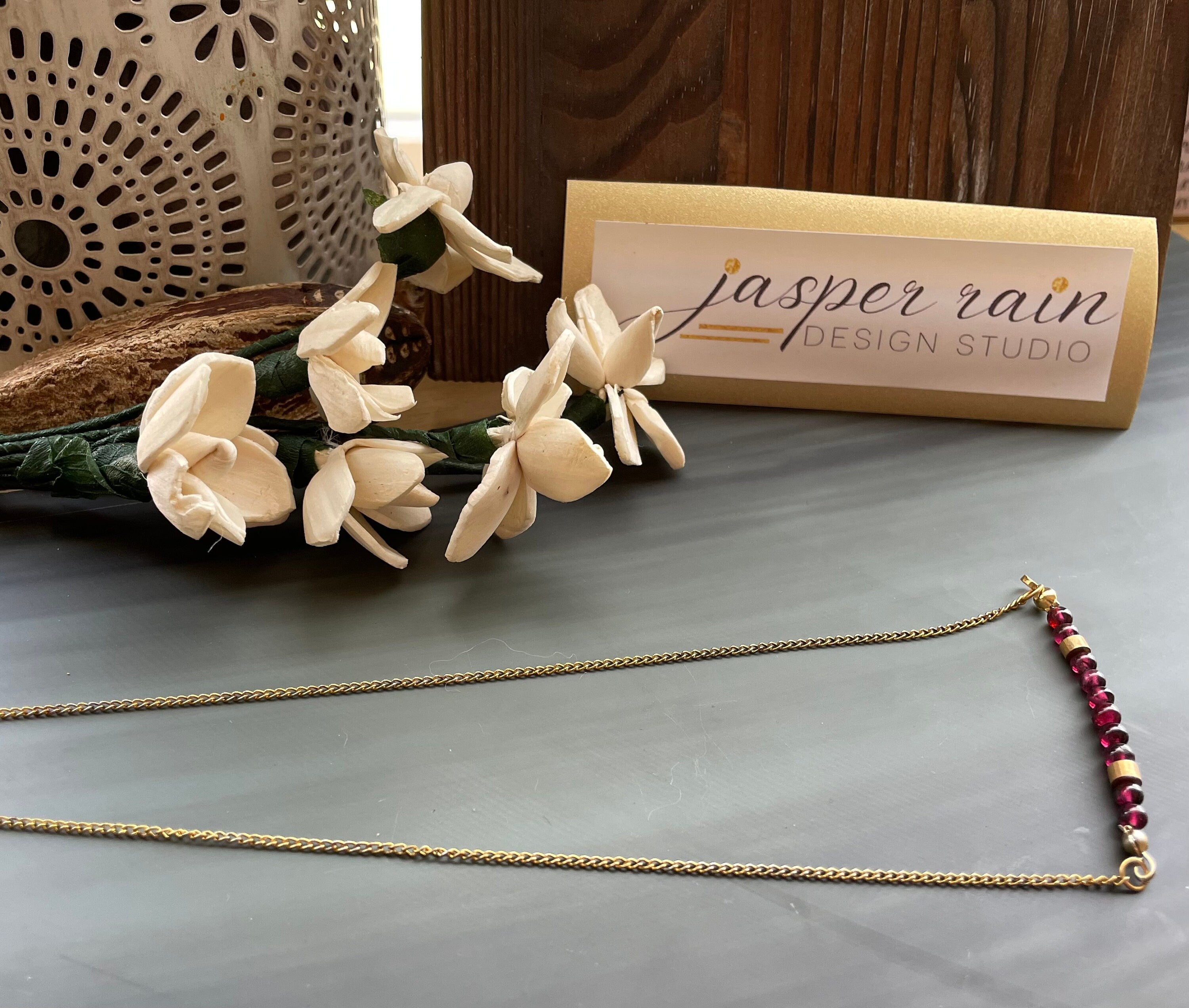
Our Natural Garnet bar and gold-filled chain necklace is 22 inches long, which places it in the matinee range. Shop this layering-friendly garnet bar necklace as a base piece for your stack. It can be worn alone for a simple, clean look or with other layered necklaces.
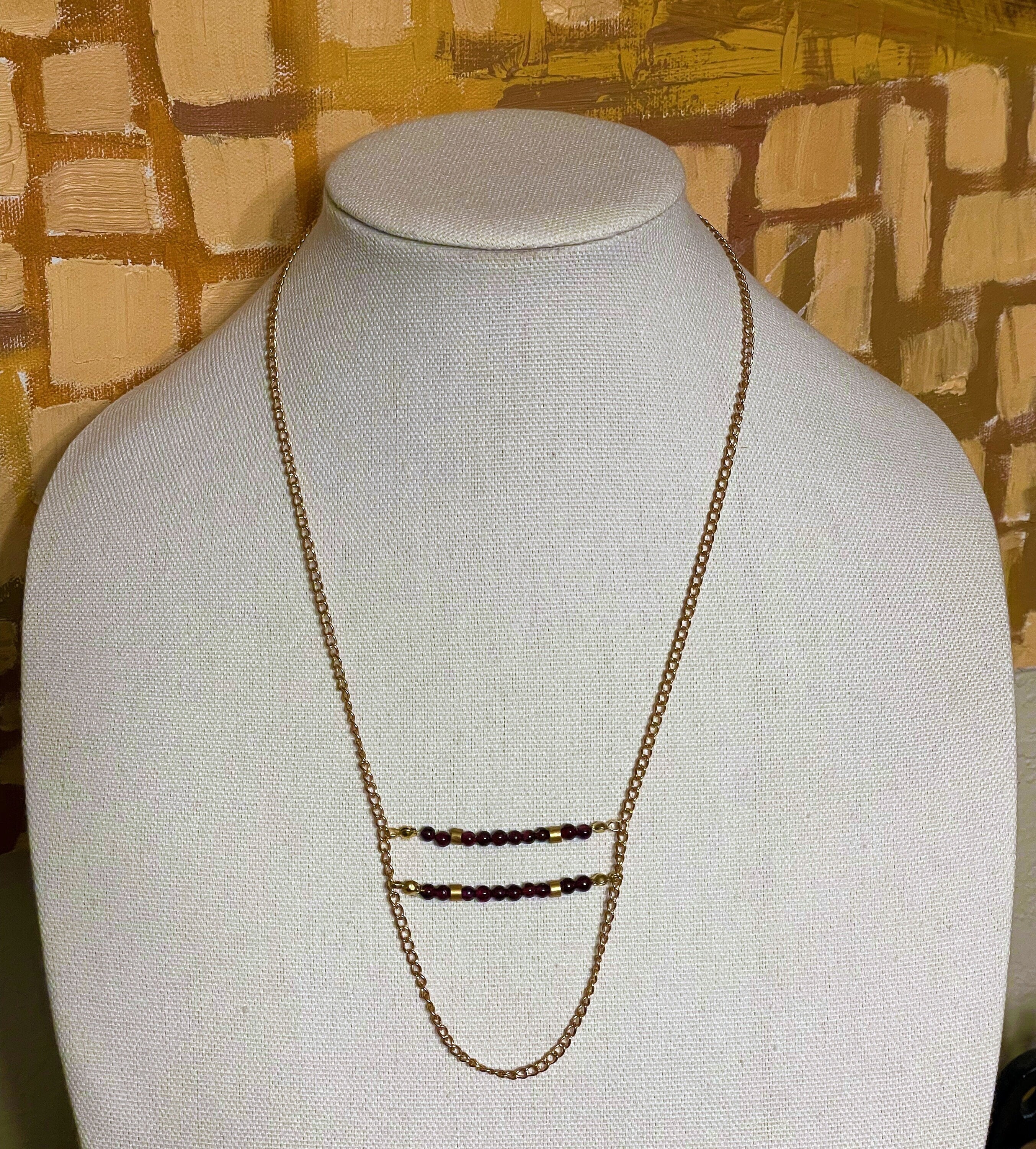
For a longer second layer, our Long Garnet and gold-filled chain necklace measures 26 inches and can be worn alone or layered. Browse the long garnet chain to use as your second or third layer.
Necklace lengths used in layering
Step-by-Step: Layering Gemstone Necklaces at Different Lengths
Follow these steps and you will end up with a stack that looks planned rather than piled on. The sequence matters more with gemstones than with plain chains, because stone weight changes how each layer hangs once the piece below it is added.
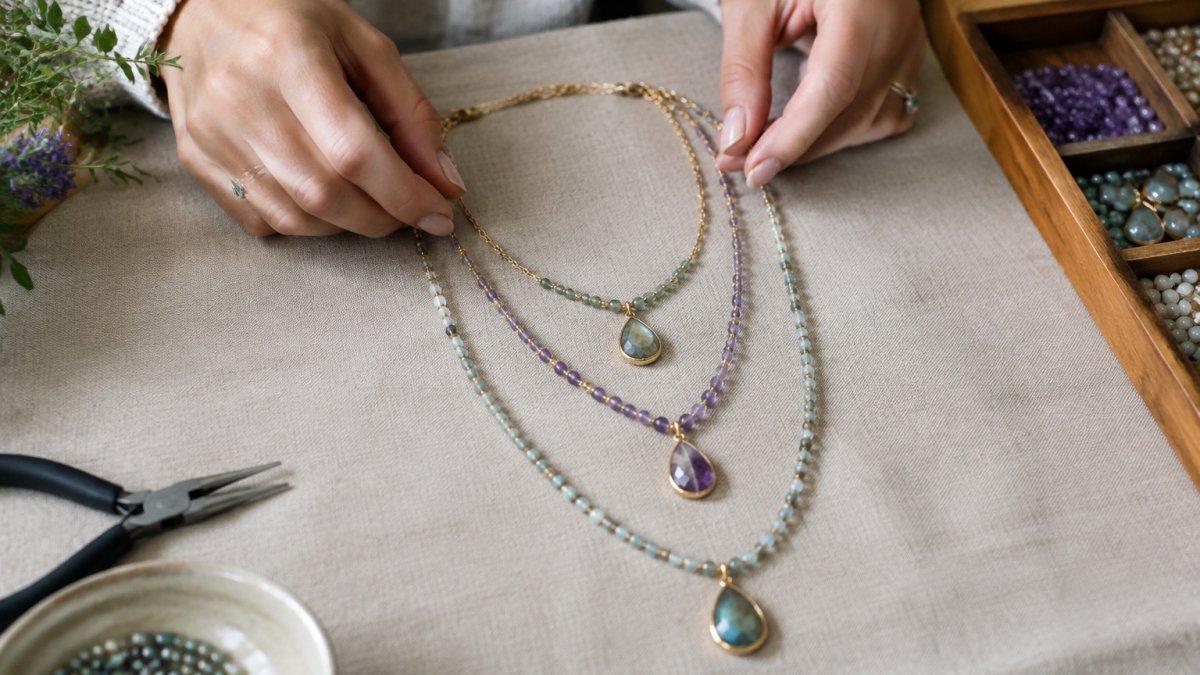
- Start with your base layer. Choose the piece you like best. This is usually your shortest or your most meaningful necklace. If your shortest piece carries a heavy stone, treat it as the anchor and plan the rest of the stack around its weight rather than its length alone.
- Add a middle layer. Place a piece about 2 inches longer than the base. Check that the two chains do not touch. A middle layer with a bar pendant or a cluster of beads will hang slightly lower than its chain length suggests, so measure the drop, not just the chain.
- Add a long accent. Finish with a piece that reaches lower on the chest. This layer adds drama without competing with the others. Keep the long layer the lightest of the three if the base and middle already carry substantial stones.
- Check the spacing. Look at your reflection from a few feet away. Each stone should be visible on its own. Then look from the side: a heavy pendant will pull its chain forward, and that forward pull is what causes layers to cross.
- Adjust before you wear it. Fix any twisted chains and lay the pieces flat so they settle where they should. Fasten the longest piece first, then the middle, then the base, so the clasps stack in a predictable order at the back of your neck.
Watch out: Do not clasp all of your necklaces at the same spot on the back of your neck. Clasp the longest piece first, then work toward the shortest, so the chains do not twist together.
Balancing Pendant Weight and Gemstone Size
Pendants and stones add weight, and weight changes how a chain hangs. A heavy pendant on a fine chain will pull the layer down and may drag the pieces below it. Balance the weight by pairing heavy pieces with lighter ones.
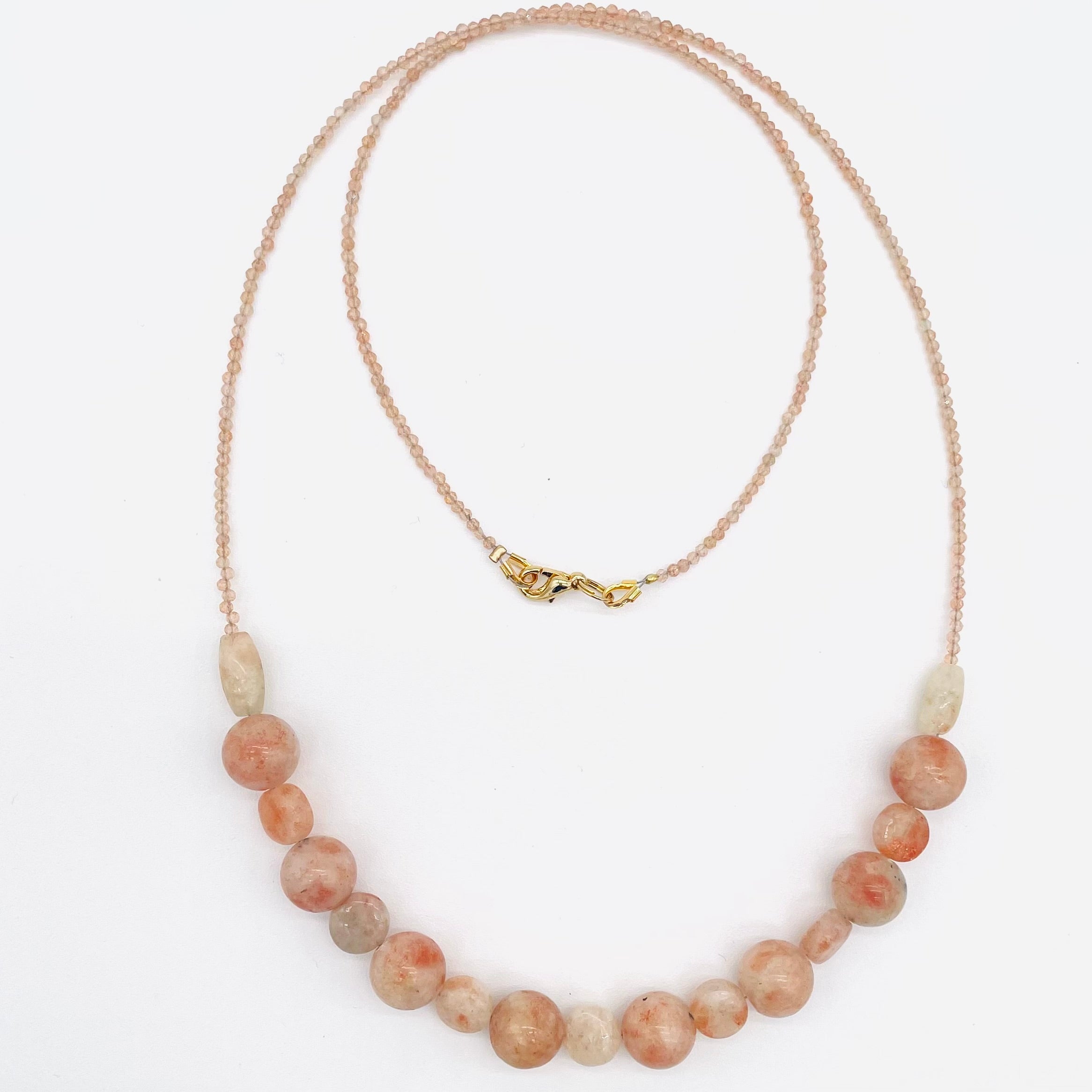
A simple rule helps. Put your largest or heaviest stone on the middle layer, where it can sit in the center of the look. Keep the delicate pieces at the top and bottom. Our Sparkling Sunstone long necklace is 24 inches long with micro sunstone beads and a gold colored brass lobster clasp. See this light, dainty sunstone piece as an example of balanced weight.
Handling Gemstone Cuts and Weight Distribution
A practical test before you commit: hold the stack up by the clasp and let it hang from your hand. The layers should fan out in order without crossing. If two pieces cross while hanging free, they will cross on your neck too, no matter how carefully you put them on.
How to Layer Necklaces Without Them Tangling
Tangling is the most common complaint about layered jewelry. The good news is that a few habits prevent most of it. The bad news is that gemstone pieces tangle for reasons plain chains do not, and the usual advice does not cover them.
Start with the basics:
- Use different lengths. Chains of the same length rub against each other all day.
- Keep the clasps at different points. Clasps that sit together snag each other.
- Store pieces flat or hung separately. Use a tray with compartments or hang each piece on its own hook.
- Untangle gently. Pull the knot apart with your fingertips instead of yanking the chain.
Beaded necklaces need extra care. Beads can catch on fine chains and pull them out of place. Keep beaded pieces on the outside of the stack, away from delicate links.
A common mistake is putting on the stack in a hurry and then wondering why it knotted. Lay each piece out first, untangled, and then put them on one at a time, starting with the longest.
Troubleshooting Tangling by Gemstone Cut
The shape of the stone decides how a layer behaves once it is moving against another. Most guides treat all gemstone necklaces the same, which is why the same stack tangles for one wearer and not another.
- **
- Faceted stones and flat bars sit still because their edges catch on the skin and hold position. They are the safest pieces to place next to a delicate chain, and they are the layers least likely to twist overnight.
- Drop pendants and off-center settings rotate around their bail. A drop pendant on a smooth jump ring can spin a full turn and wrap its chain around the layer below. A fixed bail, or a pendant with a slightly flattened ring, resists this.
- Briolette and teardrop cuts hang from a single point and swing like a pendulum. They need the most clearance of any cut, treat them as a layer of their own rather than pairing them directly against another pendant.
Weight, Friction, and the Two-Point Test
A quick check before you leave the house: pinch the stack at the collarbone and let the lower layers hang free for a few seconds. If the bottom layer swings independently and settles without touching the layer above, the spacing and weight are balanced. If it drifts sideways or wraps, move the heaviest piece down one layer or add a chain extender to open the gap.
Layering Chains With Pendants: Spacing and Balance
Pendants need room. A pendant that hangs against another pendant looks cluttered, so give each one its own space. A useful guideline is to keep pendants on different layers, at least one layer apart.
Chain weight matters here too. A thin chain can carry a small pendant comfortably, but a heavier pendant needs a sturdier chain. If a pendant seems to pull the chain out of shape, move it to a longer layer where the weight is spread across more of the chest.
You can also balance a pendant with a plain chain. Place the pendant on the middle layer and let a simple gold chain sit above or below it. The plain chain frames the pendant and keeps the stack from feeling busy.
Necklace Layering Hacks for Different Necklines
Your neckline changes where each layer should sit. Here are some quick adjustments.
- Crew or round neck: Choose a short base layer that sits just above the neckline. Add a longer piece that falls onto the fabric.
- V-neck: Let a long pendant fall into the V. Keep the shorter layers above the point so they do not tangle with the fabric.
- Scoop neck: Use a medium length as the base and let the longer layers follow the curve.
- Off-the-shoulder or boat neck: Keep the stack compact and close to the collarbone, since there is less room for length.
Match the stack to the top, not the other way around. A stack that looks perfect with a V-neck can crowd a high collar.
Caring for Your Layered Gemstone Necklaces, Then Building Your Stack
Layered pieces wear more than single necklaces, so a little care goes a long way. Remove your stack before swimming, showering or exercising. Read our complete guide to caring for natural gemstones for more tips. Water, sweat and lotion can dull the finish on gold-filled chains and wear down the surface of softer stones. Wipe each piece with a soft, dry cloth after wearing, and store them separately so the stones do not scratch each other.
Once your pieces are clean and stored, you are ready to build the stack. Start with your base layer, add your middle and long pieces, and check the spacing in the mirror. Start with one length you love, then add a second and a third as your taste grows. Shop our handmade pieces to find the lengths and gemstones that work for your style.
Frequently Asked Questions
What are the best necklace lengths for layering?
A common starting point for layering is three necklaces spaced about 2 inches apart, such as a 16-inch choker-length chain, an 18-inch princess-length piece and a 20-inch matinee-length piece. Shorter pieces sit closest to the collarbone and longer ones fall toward the chest. Jasper Rain Designs offers Garnet pieces in this range: the Natural Garnet bar and gold-filled chain necklace is 22 inches long, and the Long Garnet and gold-filled chain necklace is 26 inches. Measure your neckline before buying to confirm the spacing works for you.
How do you keep layered necklaces from tangling?
Tangling usually happens when chains of similar weight and link style rest against each other. Vary the link styles and chain weights, and avoid placing two pendants at the same height. Clasp each necklace at the back before adding the next, and lay them flat on a surface to check for crossed links. The Natural Garnet and gold rose beaded necklace is priced at $30.00.
How do you layer chains with gemstone pendants?
Place the heaviest or largest pendant on the longest chain so it has room to hang without crowding the shorter layers. Keep at least one inch of vertical space between pendants so the gemstones do not knock together. A pendant on a delicate chain works well as a focal point when the other layers are plain. The Sparkling Sunstone long necklace is priced at $72.00 with a 24-inch length.
How much space should there be between layered necklaces?
Aim for about 1 to 2 inches of vertical space between each necklace so the pieces read as separate layers rather than one cluster. Less than an inch often causes tangling and makes pendants overlap, while more than 2 inches can make the stack look disconnected. Test your spacing by wearing the necklaces together and adjusting in front of a mirror before you fasten them permanently.


