

How to Find Reputable Jewelry Artisans: A Buyer's Guide
Last Updated: November 24, 2026
Quick Summary
To find reputable jewelry artisans, verify the business record, read reviews across several platforms, ask for references, and test responsiveness with a specific question before you order. Reputable artisans show close-up photos of their work, name their materials specifically, and put custom terms in writing.
- Check the maker's name in your state's business entity database and confirm the entity is active.
- Look for reviews that describe durability after months of wear, sizing accuracy, and how problems were resolved.
- Ask for close-up photos of settings, wrapping, and clasps before you buy.
- Be cautious of stock photos, vague material claims, and clusters of reviews posted within a few days.
- Get custom terms covering deposit, timeline, revisions, and returns in writing before paying.
Table of Contents
- Why Finding a Reputable Jewelry Artisan Matters
- How to Find Reputable Jewelry Artisans Online
- How to Spot Handmade Jewelry
- Red Flags in Artisan Portfolios and Listings
- Custom Jewelry Questions to Ask Before You Order
- Artisan Jewelry Buying Checklist and Comparison Framework
- Putting Your Checklist to Work on Your Next Piece
- Frequently Asked Questions
Why Finding a Reputable Jewelry Artisan Matters
Finding reputable jewelry artisans is the difference between a piece you wear for decades and one that loses a stone or a clasp within a few months.
A reputable artisan shows you how they work, what they use, and how they stand behind it.
Because handcrafted jewelry is made one piece at a time, you cannot assume every maker follows the same standards. Some use sturdy settings and secure findings.
How to Find Reputable Jewelry Artisans Online
A useful starting point is the maker's own website, where you can look for a description of the business and the designer's name. A real artisan business usually tells you who creates the work and where the shop is based.
What separates a quick browse from real verification is a repeatable process. Instead of trusting a single review or a polished homepage, run every candidate through the same five evidence checks below.
A Five-Step Verification Process
**1.
3. Read reviews across multiple platforms. Check the maker's own site, independent review platforms, and any marketplace where they sell.
4. Ask for references. Ask the maker directly for references and notice whether the answer is specific or evasive.
5. Test responsiveness with a specific question. Send a short message before you order and ask about a material, a clasp type, or a length.
What Independent Sources Can and Cannot Tell You
Business records confirm that an entity exists, not that its work is good. Professional directories confirm membership, not craftsmanship. Reviews confirm that other buyers had an experience, not that yours will match.
Finally, look at how long the business has operated and whether its photos show pieces from several angles. Consistent, well-documented listings suggest an established practice rather than a storefront that appeared last month.
How to Spot Handmade Jewelry
Handmade jewelry carries small, honest imperfections that mass production removes. Before you buy, look for slight variations in wire thickness, hand-shaped loops, and the subtle asymmetry that comes from working by hand.
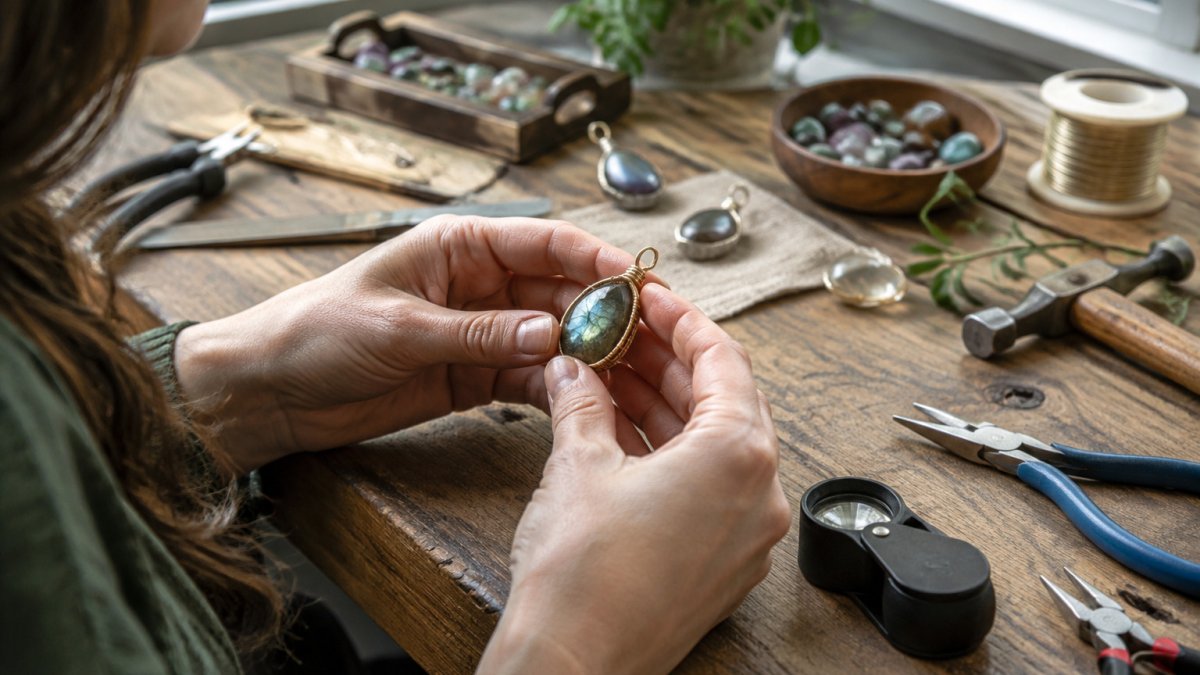
A quick test many buyers use is to ask whether the photos show the work up close. You can learn how to tell handmade jewelry apart from mass-produced pieces in our dedicated guide.
Signs in the Making: Tool Marks, Solder Seams, and Setting Work
Look for faint tool marks on metal surfaces, which show that a person shaped the piece by hand. Solder seams should be clean and neat, with no bubbles or gaps.
Setting work matters most. A stone held by bezel or wire should sit firmly with no wobble when you gently press it. Loose wrapping, glue visible around the stone, or uneven spacing between wraps are all reasons to ask more questions before you buy.
Verifying Material Claims and Gemstone Provenance
Material descriptions should be specific. A reputable maker will name the gemstone, state whether the metal is solid gold, sterling silver, or plated, and describe the chain length and clasp type.
Ask where the stones come from and whether they are natural, treated, or dyed. Honest sellers will explain this clearly. For expensive stones, ask whether the maker can provide documentation or a supplier name.
Red Flags in Artisan Portfolios and Listings
Several warning signs appear repeatedly among unreliable sellers.
Be wary of prices that seem too low for the materials described, especially when a listing claims solid gold or large natural gemstones.
Portfolios that show only finished photos and never the process may also be a concern. Consider asking for a photo of a piece in progress or a detail shot of the back of a pendant.
Custom Jewelry Questions to Ask Before You Order
Custom work involves more risk than buying an existing design, so the details matter. Before you commit, clarify the materials, the final dimensions, the timeline, and how many revisions are included.
Ask what happens if the finished piece does not match what you discussed. Good artisans explain their process for adjustments and refunds. If a maker cannot describe this clearly, consider that before paying a deposit.
Get the Terms in Writing Before You Pay
A custom order should rest on a written agreement, even a short one sent by email. At minimum, it should state the design description, the metal and gemstone specifications, the finished dimensions, the total price, the deposit amount, the delivery date, the revision allowance, and the return policy. If a maker resists putting terms in writing, that is a reason to slow down rather than a reason to trust the verbal version.
Ask these questions in order and keep the answers:
- What is the total price, and what does it include (materials, labor, setting, shipping)?
- How much is the deposit, and is any part of it refundable if I cancel?
- What is the realistic completion date, and what could delay it?
Deposits, Timelines, Revisions, and Returns
Confirm the deposit amount, when the balance is due, and whether the deposit is refundable if you cancel.
Ask for a realistic timeline in writing, including how long sourcing and finishing usually take.
Revisions are another common point of confusion. Clarify whether you may request changes to length, clasp style, or metal type, and whether those changes carry an additional cost.
Compare Quotes on Total Cost, Not Just Price
When you have quotes from two or three artisans, compare them line by line rather than on the headline number. A lower quote may exclude setting fees, shipping insurance, or a rush charge, and a higher quote may include a longer revision allowance or a written warranty. Build a simple scorecard with columns for price, included services, timeline, revision terms, return policy, and aftercare, and score each quote against the same criteria. The cheapest quote is rarely the best value once the excluded items are added back in.
Artisan Jewelry Buying Checklist and Comparison Framework
Use this checklist to evaluate any artisan before buying. Each item can be checked in a few minutes:
- The maker's name and business details are easy to find
- Reviews describe specific experiences with durability and sizing
- Photos include close-up views of settings, wrapping, and clasps
When comparing several artisans, score each one against this list and note where answers are missing or vague. A maker who scores well on specifics and responsiveness is usually a safer choice than one with the lowest price.
Be skeptical of very cheap custom jewelry that promises rare materials and rapid turnaround at once.
Use these checklist items to evaluate any artisan before you buy.
| Check | What to look for | Why it matters |
|---|---|---|
| Business details | Maker's name and business details easy to find | Confirms who creates the work |
| Reviews | Specific experiences with durability and sizing | Shows real-world wear |
| Photos | Close-ups of settings, wrapping, and clasps | Reveals craftsmanship |
| Materials | Specific metal purity and gemstone type named | Avoids vague claims |
| Responsiveness | Answers questions promptly and clearly | Predicts how problems are handled |
| Custom terms | Deposits, timelines, revisions, returns in writing | Protects both buyer and maker |
| Pricing | Consistent with the materials described | Flags unrealistic claims |
Putting Your Checklist to Work on Your Next Piece
Start by choosing one or two artisans whose work you genuinely like, then run them through the checklist. Ask your questions, look at the close-up photos, and read the reviews. The process takes less time than returning a disappointing piece.
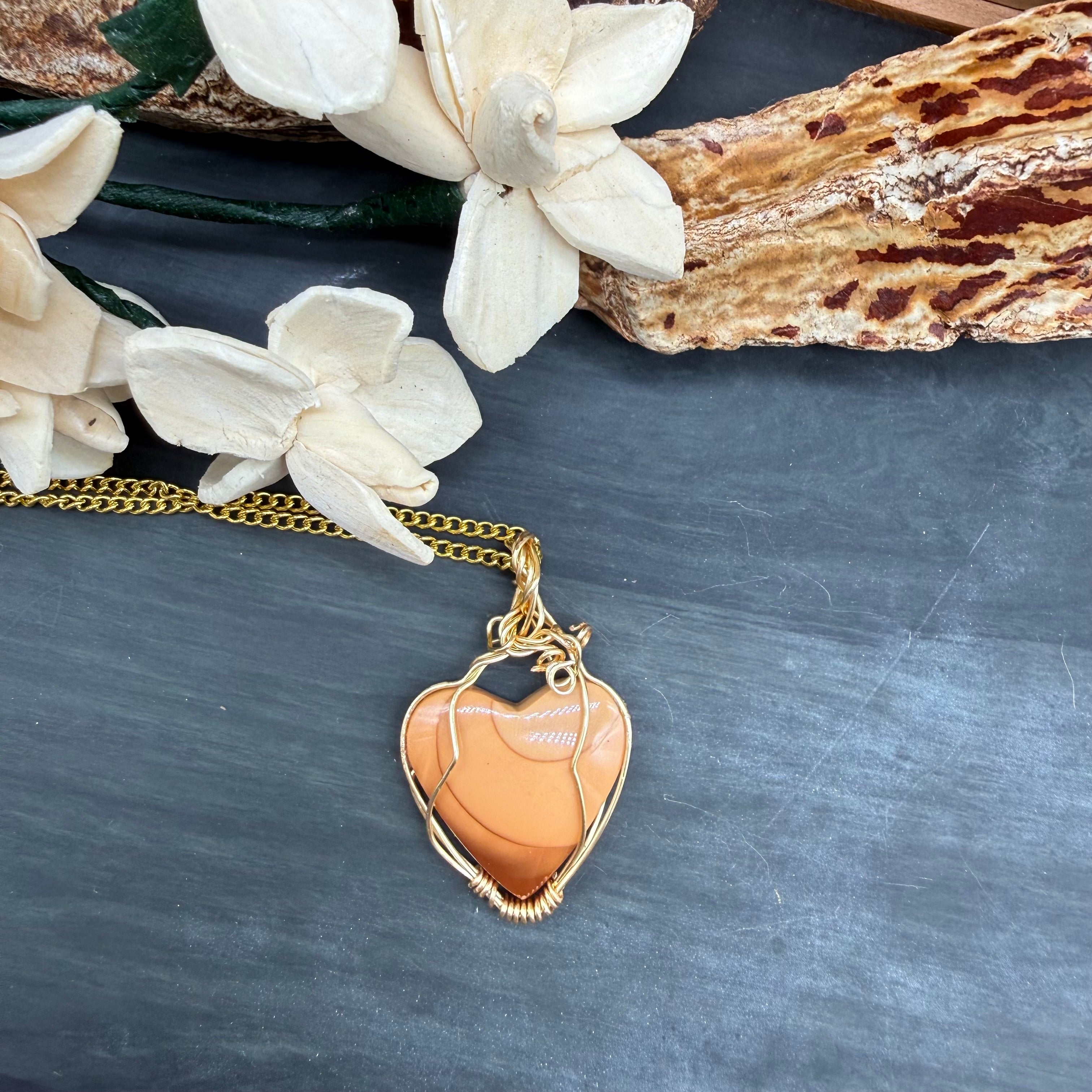
If you want to see how these standards look in practice, browse our handmade gemstone pendants to examine the wire work and stone settings for yourself. Our Rare Idaho Bruneau Jasper Heart Pendant is a wire-wrapped pendant with a Bruneau Jasper heart, 1" wide and 1.5" long, on an 18" gold chain, priced at $62.00. If you have a specific design in mind, you can start a custom order and describe your length, clasp, or metal preferences directly.
Above all, trust the evidence a maker shows you. Shop with patience, ask direct questions, and buy from artisans who welcome scrutiny. Shop our handmade pieces to find a one-of-a-kind piece.
Frequently Asked Questions
How do I know if a jeweler is reputable?
A reputable jeweler shows who makes the work, where stones and metals come from, and how the business operates. Look for a named maker, a clear return and repair policy, and customer reviews you can read across several platforms, not just testimonials on the seller's own site. Ask whether the artisan makes the pieces personally or uses production partners, and request documentation for gemstone and metal claims. A seller who answers these questions directly and without defensiveness is usually a safer bet than one who relies on vague marketing language about being handcrafted or one-of-a-kind.
How can I find reputable jewelry artisans online?
Start with independent sources rather than the artisan's own pages. Search marketplaces and craft platforms for sellers with long review histories, then cross-check the shop name against search results, social media, and any local craft fairs or galleries where the maker has exhibited. Look at whether the artisan documents the process with process photos, close-up macro images, and workshop footage. Message the maker with a specific question about a piece, such as how a stone is set or where the metal was sourced, and judge the detail and speed of the reply. Reputable artisans tend to welcome these questions.
What should I ask an artisan jeweler before buying?
Ask who makes each piece, how long the design and production take, and what the deposit and payment schedule is. Ask what metal purity is used and whether it is stamped or certified, where the gemstones came from, and whether they are natural, treated, or lab-created. Ask about the return policy, what happens if a stone or clasp fails, and whether repairs are offered and at what cost. For custom work, ask how many revisions are included and what happens if the finished piece does not match the approved design. Written answers give you a record to refer back to if a dispute arises.
How can I tell whether jewelry is genuinely handmade?
Handmade jewelry usually shows small variations that machine production does not, such as slightly uneven wire wraps, hand-filed edges, and solder seams that are visible under magnification. Stones may vary in color and pattern from piece to piece, which is expected with natural materials. Mass-produced items tend to have identical components, uniform stamping, and cast findings. Photos of the maker at work, workshop images, and detailed close-ups of the back of a piece are useful evidence. If a listing claims handmade status but offers no process images and only generic stock photos, treat that claim with caution.
What red flags should I look for when buying artisan jewelry?
Watch for portfolios that repeat the same stock photos across many listings, sellers who cannot name the maker, and descriptions that use terms like handmade or natural without explanation. Be cautious of prices far below comparable handmade work, which can signal mass-produced goods sold as artisan pieces, and of sellers who refuse to describe materials or return terms. Missing or contradictory information about gemstone treatments, unclear metal descriptions, and pressure to pay outside the platform are also warning signs. Review timelines matter too: a shop with many reviews that all appear within a few days of each other deserves a closer look.
What does a reputable artisan jewelry seller disclose?
A reputable seller discloses the maker's identity, the metals and their purity, and whether each gemstone is natural, treated, or synthetic. Dimensions should be given in inches and millimeters, along with chain length and clasp type. Return, repair, and warranty terms should be stated before purchase, not buried in fine print. For custom orders, the seller should describe the deposit, production timeline, and revision policy in writing. Any disclosed limitations, such as the fragility of certain stones or the need for periodic re-tightening of settings, indicate a seller who is being straightforward about the product.
How much does it cost to have a custom piece of jewelry made?
Custom pricing depends on the metal, the gemstones, the complexity of the design, and the maker's time. The final price should be confirmed in writing before production begins. Custom requests such as changing a chain length, swapping a clasp, or selecting a different metal can be made through the custom order request option. Ask whether the quote includes sizing, shipping, insurance, and any revision rounds. For specific pricing on any maker's offerings, refer to the seller's listed prices rather than general market estimates.
What is the 2:1:1 rule in jewelry?
The 2:1:1 rule is a shopping guideline sometimes used to describe how jewelry prices relate to a retail markup, but it is not a standardized industry measure and should not be treated as a reliable test of value. A more useful approach is to compare what is included in the price: the metal weight and purity, the stones, the labor involved in making the piece, and the aftercare and warranty. When comparing two artisan pieces, judge them on craftsmanship, materials documentation, and seller reliability rather than on a markup formula.


